|
160MERWAN IS BORN1914
Merwan continued to visit Jamshed in Bombay, going with Baily most weekends. They would board the afternoon train from Poona on Saturday and reach Bombay at 7:00 P.M. Jamshed would meet them at the Byculla railway station. "Together in Jamshed's company," Baily recalled, "we would reach his room, relax awhile from the journey's exhaustion, freshen up and go to a hotel [restaurant] to have some food. At times, we would attend plays or watch silent cinema shows. Sometimes we would travel, visiting various places by tram or train, spending our time sightseeing and return late at night. The next day being a Sunday [Jamshed's day off from work], we three would enjoy the whole day till late in the night. Catching the night train the same day we would reach home early the next morning."
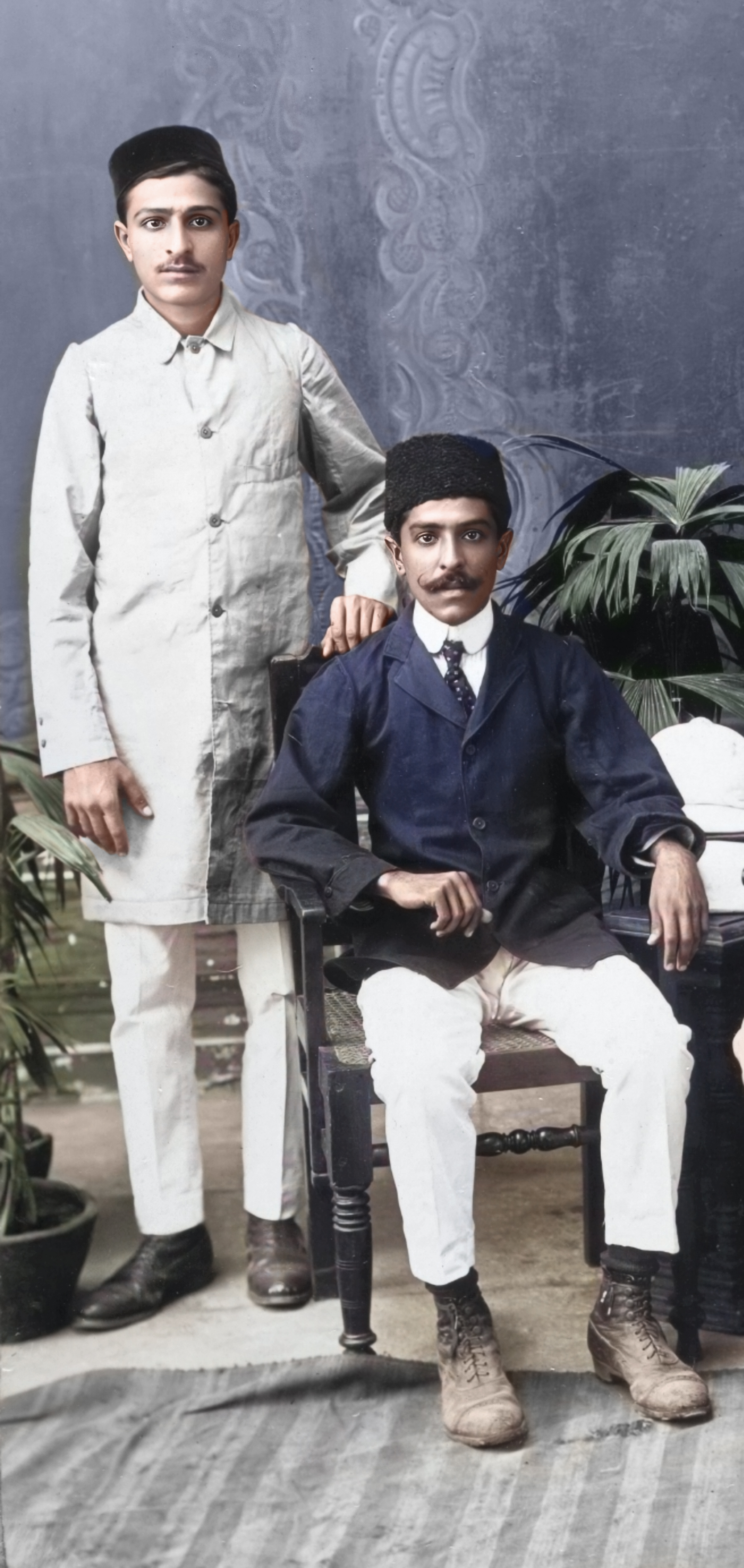 with Jamshed, 5 January 1916
One day, Merwan suddenly announced he wanted to visit important Zoroastrian places of pilgrimage in Gujarat. He decided to go with his brother Jamshed and four of his friends — Baily, Khodu, Behramji, and Lattoos. Merwan and his five companions set out from Poona to pay their respects first at the oldest fire-temple in India at Udwada. Like Benares to the Hindus and Mecca to the Muslims, Udwada is the holiest place of pilgrimage to Zoroastrians in India. It was in Udwada over 1,200 years ago that the first Zoroastrian emigrants from Persia settled. Prophet Zoroaster is believed to have started a sacred fire in Persia over thousands of years before and to have established the worship of fire, which all Zoroastrians practice. The first Zoroastrians to emigrate to India brought with them this sacred fire and built a temple in Udwada to house it. Guarded by the temple priests, it was never to be extinguished.
Prior to beginning the journey, Merwan laid out certain conditions: No one was to imbibe any alcoholic drinks except beer and toddy (an inexpensive fermented drink from the toddy palm). Only vegetarian food was to be taken — consumption of meat, chicken and fish was forbidden. Lastly, no one was to use any foul language or swear words and not allow any "low thoughts" to enter their mind. Even in those days Merwan's friends respected him so much that they instinctively obeyed him and did exactly as he said. And since Merwan had taken responsibility for the journey by pre-paying for everyone's fare and expenses (they were to reimburse him afterwards), they felt honor-bound to comply with his wishes and promised to abide by them.
The group spent three days at Udwada, and each morning Merwan led the young men to the fire-temple for prayers. Afterward they would sit under the shade of palm trees or walk along the sandy beach. On the first day when it was mealtime, Merwan's friends sat around a table, while he, as a sign of respect for their devout journey, sat on the floor and ate only potatoes and chapatis. All five friends were impressed by Merwan's pious demeanor.
The afternoons were quite warm and once after finishing their lunch, the group decided to rest in their room. As they were about to leave, Merwan suddenly began singing a song in Persian with deep fervor. His singing was so beautiful that it captivated their attention and they forgot about their intended naps. The sweetness of Merwan's voice brought other guests out of their rooms. Everyone enjoyed Merwan's singing so much that they requested that he sing another and another, and he continued singing ghazal after ghazal. Some were commonly known, while others were his own compositions, composed extemporaneously.
An elderly gentleman was so affected that he complimented Merwan as he patted him on the back, "The glow on your face while you sang, and the ghazals you, yourself, composed to the glory of God, lead me to believe that someday you will be a great man whose name will be known throughout the world."
|